

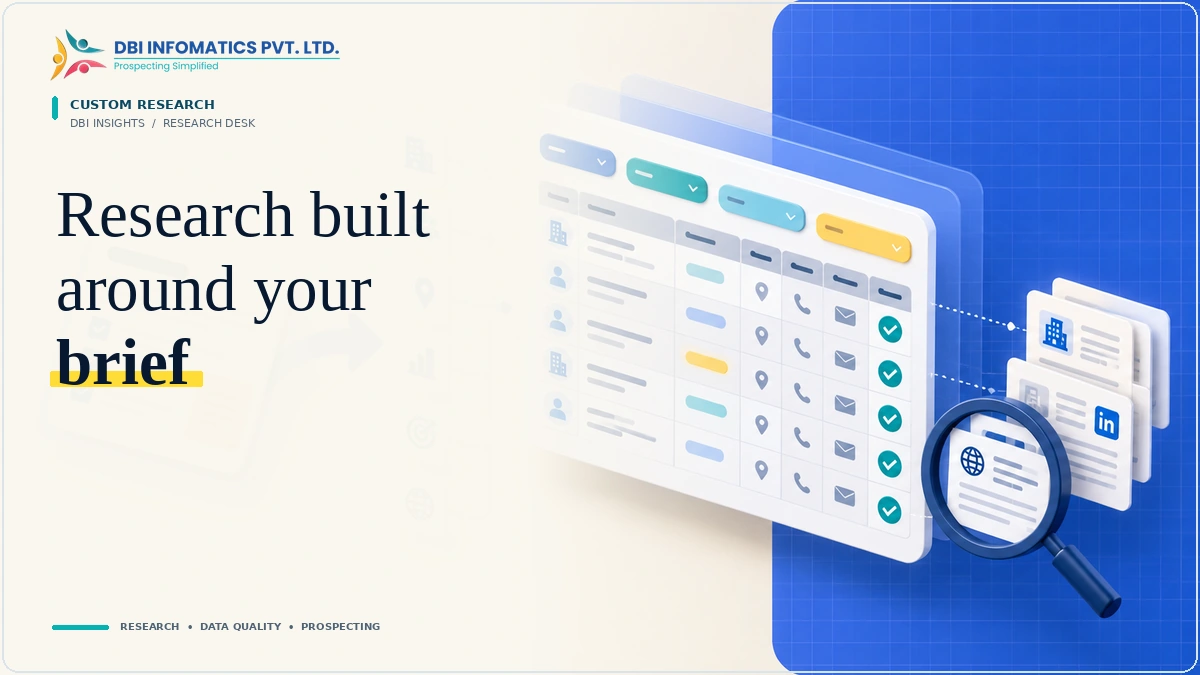
Standard B2B databases are designed for scale. They become less convenient when the audience is narrow, the research fields are unusual or the project needs evidence behind inclusion.
Different models solve different problems
Packaged data optimizes for repeatable access. Custom research optimizes for specificity. The right choice depends on whether the standard dataset matches the actual brief.
When custom research helps
- Niche or specialized industries
- Custom vertical definitions
- Specific decision-maker functions
- Website-based evidence
- Company status or ownership checks
- Custom classifications
Why volume can hide poor fit
A larger list is not automatically a more useful list. When the audience is tightly defined, extra general-purpose records can increase review work without improving targeting.
Bespoke should still be structured
A good project uses a clear schema, source scope, inclusion rules, exclusions and quality checks. Customization should change the research method, not remove process discipline.
Have a niche B2B data requirement?
Share the target audience, fields and exclusions. DBI can structure the project around the research brief.
Discuss a Custom Research Project →